

























































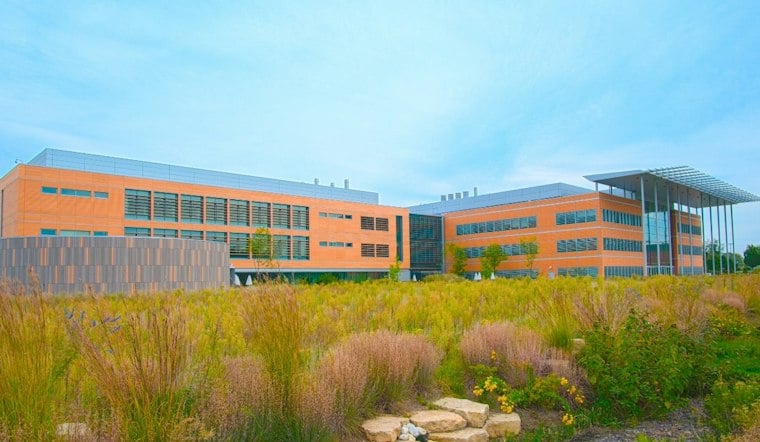
The Government of Rwanda formally welcomed the Donald Danforth Plant Science Center as a founding partner of the Rwanda Food Innovation Partnership on Wednesday, cementing a research relationship between the St. Louis-based institute and Rwandan agriculture that has been building for years. The announcement landed just a day after Kigali, Rwanda's capital, became St. Louis' 17th sister city.
The partnership was publicly announced at a session at the Rwanda Institute for Conservation Agriculture outside Kigali, according to the Donald Danforth Plant Science Center. The announcement came during a trade mission to Rwanda and Kenya organized by World Trade Center St. Louis, as first reported by FOX 2. The thirty-six-member delegation of business and civic leaders included St. Louis Mayor Cara Spencer and St. Louis County Executive Dr. Sam Page, per the center's announcement.
The Rwanda Food Innovation Partnership is described as a government-led initiative to advance agricultural innovation, crop development and food production, and it connects research, regulation and the private sector, the center's statement says. It will support Rwandan researchers, regulators, entrepreneurs and industry in five areas, with the announcement naming crop improvement, climate resilience, technology commercialization and scientific training among them. Danforth Center researchers will work alongside Rwandan scientists, government officials and industry leaders on those projects.
A Sister-City Deal Signed One Day Earlier
The timing was no coincidence. Kigali's sister-city agreement with St. Louis became official after a signing ceremony on Nov. 10, held during the same trade mission, according to the St. Louis Economic Development Partnership. The agreement calls for the two cities to explore economic, educational and cultural opportunities, with a focus on agriculture and agricultural technology, biosciences, healthcare and information and communications technology, the economic development partnership notes.
Danforth Center President Giles Oldroyd said the institute is honored to support Rwanda's agricultural improvement vision as a partnership member. He added that scientific discovery reaching farmers and markets can build industries, create jobs and generate prosperity, and said the center looks forward to sharing expertise, learning from Rwandan partners and deepening ties between Rwanda and St. Louis.
Years of Cassava Research Already Underway
This is not the Danforth Center's first foray into Rwandan agriculture. The institute has collaborated with agricultural organizations in Rwanda for years, including work with researchers from the Rwanda Agriculture and Animal Resources Development Board on cassava resistant to cassava brown streak disease, a crop disease that can devastate yields. The partners expect to share more progress on that cassava work in 2027, per the center's statement.
That history runs deeper still. In January, the center said it had joined a new international initiative to establish a Centre of Excellence for Crop Biotechnology at Rwanda's RAB Rubona Station in Huye District, intended to help the country develop and deploy improved crop varieties tailored to local needs. That effort is tied to the Rwanda Capacity Building, or BioCap, Project — a five-year, $15 million initiative supported by the Gates Foundation that aims to improve key food crops' resistance to pests and diseases, increase productivity, and strengthen Rwanda's ability to develop, regulate and deploy improved crop varieties, the center said at the time.
Rwanda's Broader Food Innovation Push
Rwanda's own Food Innovation Ecosystem Strategy for 2026 through 2035 sets ambitious targets: creating 30,000 youth jobs in the food innovation economy and raising agri-food export value above $650 million by 2035, according to the Danforth Center's announcement. The New Times has reported separately that the Rwanda Food Innovation Partnership is expected to serve as the implementation vehicle for that strategy, with a reported $20 million funding ambition.
Figures on Rwanda's current food self-sufficiency vary by source. Rwanda's Ministry of Agriculture and Animal Resources has said the country currently achieves nearly 83 percent food self-sufficiency, according to the Rwanda Ministry of Agriculture and Animal Resources. Separately, the National Institute of Statistics of Rwanda has reported a 2024 food self-sufficiency ratio of 79 percent, down slightly from 80 percent in 2023; it is not clear from available information whether these figures measure the same thing or cover the same period.
The broader economic backdrop also factored into the trade mission's framing. A 2023 Euromonitor report cited by the St. Louis Economic Development Partnership projected East Africa's economy would grow at a compound annual rate of 6.1 percent from 2022 through 2040, underscoring why St. Louis civic and business leaders traveled to the region. The partnership strengthens ties between St. Louis and Kigali at a moment when both cities are betting on agricultural science as a shared growth engine.
St. Louis' Stake in the Partnership
The Donald Danforth Plant Science Center, based in St. Louis, describes itself as the world's largest independent nonprofit plant science research institute. It says it contributes more than $400 million annually to the St. Louis regional economy, a figure that underscores why local civic leaders joined the trade mission that produced both the sister-city agreement and the new Rwandan partnership. For now, the center's cassava work and its role in the broader Centre of Excellence for Crop Biotechnology effort remain its most concrete points of contact with Rwandan agriculture, with further updates expected as the newly announced partnership gets underway.




